Σελίδες

Συνολικές προβολές σελίδας

Εμφάνιση αναρτήσεων με ετικέτα Technology. Εμφάνιση όλων των αναρτήσεων

Σάββατο 1 Σεπτεμβρίου 2012

Upgrading the dogs of war

In a secluded section of Raleigh, North Carolina live 16 carefully selected recruits for a high-priority Pentagon project that could play a life or death role in Afghanistan.
None of them have any previous military experience, so their training is necessarily disciplined – if they get through the programme their work could pave the way for others, like them, who will be called on to make life-saving decisions in high-stress environments. As a result, nothing is left to chance.  Their days involve intense physical and mental training to see if they are able to cope with the rigors of war.
Outside, a trainer introduced me to one recruit, Jimmy, who is outfitted with a telemetry vest, which can measure his physiological changes, such as heart rate, breathing, and skin temperature. It gives him an almost Olympian look, like an athlete whose every breath is measured by a team of coaches.
But you also get a sense that Jimmy gets a kick out of it. As he is ordered forward, he is panting and his tail is wagging with the enthusiasm of youth.
The good-natured black Labrador retriever is the Jason Bourne of dogs – part of a specialised Navy programme designed to select and train the most highly skilled members of his breed for a high-priority mission: finding improvised explosive devices (IEDs) on the battlefield. While prototypes of the dogs have already been deployed, research on Jimmy and his colleagues is part of a “2.0” version of the programmme, which is based on formal science studies being conducted here at North Carolina State University’s College of Veterinary Medicine, and other universities.
Over the past six years, the Pentagon has spent over $18 billion trying to find ways to detect and neutralise roadside bombs – the leading killer of US troops in Afghanistan –by investing in everything from better mine detectors to newfangled devices that shoot beams of energy. But in North Carolina, a state that is home to a 300-year hunting dog tradition, everyone seems to agree on the best technology for the job.
In the lab, I’m introduced to Dakota, one of Jimmy’s colleagues. In front of Dakota are two small containers, one scented with vanillin and the other with ethanol. Dakota, who is learning to signal when she detects a scent, is supposed to select the vanillin, a training aid that will later be switched to ammonium nitrate used in explosives. If she selects correctly, she’ll be rewarded with a treat. She gets the first one right, choosing vanillin, misses the next two, but then got the fourth one right. At that point, she was averaging 50-50, which is not good, but she was still a beginner with time to learn.
Biting machine?
Though war dogs may be high profile these days – thanks in part to Cairo, the Belgian Malinois who accompanied Navy Seals on the Osama bin Laden raid – there were virtually no deployed military bomb dogs working on battlefields when the US invaded Iraq, and hadn’t been for decades. After the Vietnam War, the military’s working dog programme was handed over to the Air Force, which used them to patrol missile fields in the United States. Those dogs were used to being guided on leashes, living in air-conditioned kennels and working limited shifts: a far cry from a war zone.
That quickly changed with the arrival of IEDs and in 2007, 13 dogs – all Labs – were deployed with the Marines to Iraq and Afghanistan. When the dogs started finding bombs, Marines asked for more, and today there are some 600 dogs.
Whilst successful, they were all essentially prototypes for the next generation of bomb dog. “After we do all this science, we’re going to rewrite the protocols,” says Lisa Albuquerque, an energetic Navy official who heads the programme, known formally as the IED Detector Dog. “It’s basically an upgrade to an existing model.”

 http://www.bbc.co.uk/

Παρασκευή 24 Αυγούστου 2012

India to Equip Police Cars With Radiation Scanners

Some police cruisers in leading urban areas of India are to be equipped with portable radiation sensors in accordance with government efforts to rein in unapproved uses of sensitive substances, the Indo-Asian News Service reported on Thursday.
Indian Minister of State for Parliamentary Affairs V. Narayanasamy informed lawmakers that in excess of 800 law enforcement outposts in the South Asian state would receive radiation detection technology.
"The radiation detection systems installed in a mobile platform will have the capability to search and detect gamma emitting radionuclides," Narayanasamy said. "The mobile radiation detection vehicles are intended to help the police forces to detect any inadvertent presence of radioactivity in public domain. This system will also act as a deterrent for unauthorized usage of radioactive materials."
A number of radiological materials have uses in the civilian sector but authorities are concerned they could be exploited by terrorists looking to build a radiological "dirty bomb." 

http://www.nti.org/gsn/

Τετάρτη 15 Αυγούστου 2012

Underground spies to secure Indo-Pakistan border

With the discovery of a 400-foot long tunnel at the India-Pakistan Border, the IndianHome Ministry has decided to acquire Unattended Ground Sensors (UGS) that could be installed along the international border with Pakistan as an important line of defense
With the discovery of a 400-foot long tunnel at the India-Pakistan Border, the IndianHome Ministry has decided to acquire Unattended Ground Sensors (UGS) that could be installed along the international border with Pakistan as an important line of defense.
The Daily Mail reports that the UGS can detect any movement above or under the ground and send an alert in real time to the control room. On 9 August the Border Security Force (BSF) issued an expression of interest for procuring UGS.
The United Stateshas used these devices extensively to slow infiltration on the Mexican-American border as well as planted UGS in Afghanistan in order to detect anyone moving towards troops and report the locations back to American control rooms. They devices havealso been used by Israel.
The UGS are wireless and would help bolsterthe fencing that separates Pakistan and Bangladesh in order to stop infiltration. The technology is expensive, but highly effective as each UGS can monitor can area of at least three kilometers and can last on one battery for almost two years after being buried.
The underground spies detect movement by man or machine through its magnetic, seismic,and infrared sensors and can even take a photo of a possible intruder and send it to the control room. With electro-optic and infrared imaging capability, UGS provide high quality photos day or night. The sensor can also endure adverse weather and temperatures from -10 degrees Celsius to 55 degrees Celsius.
The Mail notes that the Indian Home ministry officials say the UGS could have detected the tunnel that was unearthed in the Samba sector of Jammu last month which has been allegedly dug from the Pakistan side 110 meters into India’s territory.
A preliminary report submitted by the BSF, to the home ministry said that the tunnel was three feet wide and five feet high, which means that intruders spent their time building the tunnel as they could literally walk through it. The tunnel’s origin seems to be in a forested area, evidenced by the oxygen pipes found on the roof of the tunnel.
BSF director general U.K.Bansal visited the spot and has told the home ministry that thirtylocations on the Indo-Pak border in Jammu frontier have been identified which need a close watch in wake of the discovery of the tunnel. Sources in the army, meanwhile, blame the BSF for lack of surveillance and ineffective patrolling that led to such a huge tunnel being dug up.
It is also unclear who exactly was using the tunnel and whether it was being used for terrorist activity or for people wanting to move from one country to the next.
With the UGS planted, it will be almost impossible for infiltrators to get past the border using underground tunnels.

http://www.homelandsecuritynewswire.com/

Κυριακή 29 Ιουλίου 2012

Cisco and Thales Target Global Defense and Security Market

Cisco (CSCO) and Thales, a global technology leader with a unique capability to provide equipment, systems solutions and services that meet the most complex security requirements for defense and security, aerospace and transportation markets, today announced a new partnership to address the global defense and security market.
The new agreement will combine Thales’ global industry expertise with Cisco networking and communications innovations, expand the collaboration globally and accelerate joint go-to-market activities and solution development. The expanded collaboration is built on a long-standing relationship between the two companies in the European market.
The Cisco-Thales collaboration will encompass a number of strategic initiatives, including:
  • Development of Thales solutions based on a range of Cisco technologies
  • Jointly addressing key defense and security market opportunities such as mobile routing or broadband evolution of radio networks
  • Joint go-to-market activities, closely coordinated at both global and country level
Highlights:
  • Cisco will provide Thales with an extensive range of standard networking equipment and infrastructure, complemented by industry leading networking design and engineering expertise from Cisco Services.
  • Cisco will also utilize its rigorous sales and technology training programs, such as Cisco Sales Expert and Cisco Vertical Solutions Architect, to enable Thales global sales and engineering teams.
  • Thales will become a Cisco Global Specialty Integrator, allowing Thales to embed Cisco technologies into its own systems and solutions in all geographies, where a strong resilience and high quality of networking services is required.
  • The designation will also enable Thales to partner directly with Cisco globally and resell select networking technology and collaborate in the development of new solutions.
Jean-Michel Lagarde, senior vice president in charge of Systems Activities, Thales Communications & Security, commented:
“This will be a hugely valuable long-term collaboration for both businesses. Combining Thales’ specialist industry expertise and advance integration capabilities with Cisco’s world-leading networking knowledge and technology will allow us to develop and deliver genuinely innovative security solutions to our customers worldwide.”
Chris Dedicoat, president, Europe, Middle East, Africa and Russia, Cisco, commented:
“Cisco and Thales share a common belief in the importance of the network in driving innovation and delivering business value within the defense sector. By working closely together, both companies will be better placed to address existing opportunities within the industry and create the new solutions that will help deliver competitive advantage and drive new market opportunities across the defense, security and aerospace industries.”
Thales is a global technology leader for the Defence & Security and the Aerospace & Transport markets. In 2011, the company generated revenues of EUR 13 billion with 67,000 employees in 56 countries.
Cisco (CSCO) is the worldwide leader in networking that transforms how people connect, communicate and collaborate.

http://www.defencetalk.com/

Πέμπτη 26 Ιουλίου 2012

Harris Atlas Systems to Establish Geospatial Data Sharing System for a Mid-Eastern Government

Harris Atlas Systems LLC has been awarded an $8 million dollar contract to provide a Middle Eastern government agency with a system that will ensure that critical military and public safety information can be shared quickly, easily and securely even under the most demanding circumstances.
The advanced geospatial intelligence solution consists of enterprise and mobile versions of Harris Corporation’s Active Catalog™ system, which enables users to manage, share, and retrieve large volumes of geospatial data — information that identifies the geographic location and characteristics of natural or constructed objects — that reside throughout an enterprise. It also provides access to live data feeds, and can generate and publish documents and map products of urban environments.

Active Catalog integrates with a variety of Open Geospatial Consortium-compliant and standard geographic information systems software, such as ESRI and Bentley, which many customers are already using for military, intelligence and public safety operations. With sophisticated techniques to extract metadata, it supports a wide range of data formats, including overhead and aerial imagery, maps, intelligence reports, sensor data and other derived products. Data and metadata are securely shared between enterprise and remote versions of the system, enabling remote users to access enterprise-based geospatial intelligence data and also send field-collected information back to the enterprise.
Leveraging 130 patents and more than 30 years of experience developing systems for the largest geospatial customers, Active Catalog goes beyond traditional catalog capabilities to one that incorporates a variety of data sources, and effectively support remote users in the most limiting environments — such as in a disaster or emergency — and delivers the highest level of security possible, Leon Shivamber, managing director, Harris Atlas Systems explains.

 http://defense-update.com/

Δευτέρα 2 Ιουλίου 2012

Bomb threat? There’s an app for that

In the first chaotic moments after suspicion of a bomb threat, first responders have a myriad of questions, assessments, and decisions to make, all at once, and all the while the scene could be changing rapidly: Is the bomb real? How large is the potential blast radius? Where will we evacuate people? Are there any critical infrastructure or special-needs population centers in the vicinity? Any schools, hospitals nearby? What roads should be closed? Which roads should stay open for evacuees? There are many more questions, many more uncertainties; DHS Science and Technology Directorate (S&T) and its private sector partners have now developed a must-have app: the First Responder Support Tools (FiRST) for computers and smartphones
There is now an app for bomb threats // Source: eurekalert.org
At approximately 6:30 p.m. on Saturday, 1 May 2010, a smoking SUV in Times Square was reported by alert street vendors. Acting quickly, NYPD evacuated vast stretches on 7th and 8th Avenues, including Broadway theatres and several other buildings and hotels in the area. The entire area was barricaded. Times Square on a Saturday evening before the shows is teaming with people, and the terrorist knew that. The bomb failed, but had it detonated, it would have killed and wounded many, according to NYPD.
In the first chaotic moments after suspicion of a bomb threat, first responders have a myriad of questions, assessments, and decisions to make, all at once, and all the while the scene could be changing rapidly. Is the bomb real? How large is the potential blast radius? Where will we evacuate people? Are there any critical infrastructure or special-needs population centers in the vicinity? Any schools, hospitals nearby? What roads should be closed? Which roads should stay open for evacuees? There are many more questions, many more uncertainties.
What if they could get all this information in one place?
Now they can. DHS Science and Technology Directorate (S&T) says that it and its public and private sector partners have developed a must-have “app”: the First Responder Support Tools (FiRST) for computers and smartphones.
The FiRST application was developed in partnership with the DHS National Protection and Programs Directorate’s (NPPD) Office of Infrastructure Protection (IP) along with its Office for Bombing Prevention (OBP), and Applied Research Associates, Inc. (ARA). The FiRST app provides information directly to first responders on their smartphones or laptop computers in order quickly to define safe distances to cordon-off around a potential bomb location, calculate rough damage and injury contours, suggest appropriate roadblocks, determine when mandatory evacuation or shelter-in-place circumstances apply, and to identify nearby areas of particular concern: schools, hospitals, care centers. The application also provides the geospatial information regarding potential injury, glass, or structural damage impact area.
“That’s why it works,” said Christine Lee, FIRST program manager in S&T’s First Responder Group. “Bomb threat scenarios do not reflect a one-size-fits-all approach, and this app allows users to customize information to help them make informed decisions for response.”
The FiRST application also includes HAZMAT response information based on the Emergency Response Guidebook (ERG) which includes information on over 3,000 hazardous materials. In addition to providing health precautions and response guidance, FiRST also

 http://www.homelandsecuritynewswire.com/

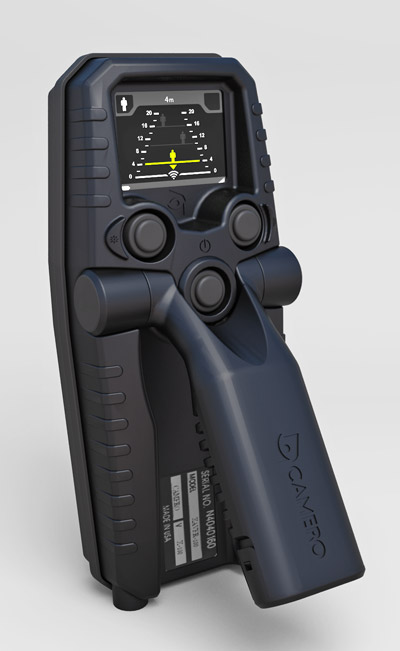
Xaver 100 Sensor Can See Through Walls (STTW)

Camero-Tech is launching the latest member of the Xaver Sense Through The Wall (STTW) radar, designed to assist assault teams and warfighters employed in urban operations to ‘see through walls’. The new Xaver 100 is an ultra-portable, handheld ‘presence-of-life’ detector providing military, law enforcement, and search & rescue personnel with critical information in real time by detecting the presence of life behind walls.

Designed for use by tactical teams and first responders, the sensor provides instant situational awareness and target acquisition data, detecting human presence at distances up to 20m. The sensor can also be operated in stand-off mode, at a distance from the wall.

http://defense-update.com/

First successful "spoofing" of UAVs demonstrated

A research team successfully demonstrated for the first time that the GPS signals of an unmanned aerial vehicle (UAV), or drone, can be commandeered by an outside source — a discovery that could factor heavily into the implementation of a new federal mandate to allow thousands of civilian drones into the U.S. airspace by 2015
Researchers demonstrate hackers can take over UAV control // Source: iran-forum.ir
A University of Texas at Austin research team successfully demonstrated for the first time that the GPS signals of an unmanned aerial vehicle (UAV), or drone, can be commandeered by an outside source — a discovery that could factor heavily into the implementation of a new federal mandate to allow thousands of civilian drones into the U.S. airspace by 2015. The experiment was performed on a civilian drone owned by the university.
Cockrell School of Engineering assistant professor Todd Humphreys and his students were invited by DHS officials to attempt the demonstration in White Sands, New Mexico in late June. Using a small but sophisticated UAV along with hardware and software developed by Humphreys and his students, the research team repeatedly overtook navigational signals going to the GPS-guided vehicle.
A University of Texas at Austin release reports that the technique, known as “spoofing,” creates false civil GPS signals that trick the vehicle’s GPS receiver into thinking nothing is amiss — even as it steers a new navigational course induced by the outside hacker. Because spoofing fools GPS receivers’ on both their location and time, some fear that most GPS-reliant devices, infrastructure and markets are vulnerable to attacks. That fear was underscored — but not proven — when a U.S. military drone disappeared over Iran late last year and showed up a week later, intact, and in the care of Iranians who claimed to have brought the vehicle down with spoofing.
The recent demonstration by University of Texas at Austin researchers is the first known unequivocal demonstration that commandeering a UAV via GPS spoofing is technically feasible.
“I think this demonstration should certainly raise some eyebrows and serve as a wake-up call of sorts as to how safe our critical infrastructure is from spoofing attacks,” said Milton R. Clary, a senior Department of Defense (DoD) Aviation Policy Analyst at Overlook Systems Technologies, which is working with the federal government to develop programs that identify and mitigate spoofing attacks.
Humphreys said his research team wanted to demonstrate the potential risks associated with spoofing early on in the Federal Aviation Administration’s task to write the mandated rules that will allow government and commercial drones in the U.S. airspace by 2015.
“We’re raising the flag early on in this process so there is ample opportunity to improve the security of civilian drones from these attacks, as the government is committed to doing,” Humphreys said.

 http://www.homelandsecuritynewswire.com/

Δευτέρα 21 Μαΐου 2012

Nanostructured sensor detects very low concentrations of explosive

The male silk moths has a highly sensitive sense organ which it uses to recognize pheromone molecules excreted by females as these molecules land on male’s antennae; scientists now use the male silk moth approach in explosives detection
To prevent terrorist attacks at airports, it would be helpful to detect extremely low concentrations of explosives easily and reliably. Despite the development of various sensor technologies, dogs continue to be the most efficient detectors. In the journal Angewandte Chemie, a German and French team has now described a type of micromechanical sensor with a structure derived from the sense organs of butterflies.
A Wiley release reports that one approach used for sensors is based on microcantilevers. These are tiny flexible cantilevers like those used to scan surfaces with atomic force microscopes. When used in “chemical noses” the microcantilivers are coated with a material that specifically binds to the analytes being detected.
Cantilevers can vibrate like springs. When analyte molecules are bound to a microcantilever, its mass changes along with its frequency of vibration. This change can be measured.
Because of their very low vapor pressure at room temperature, the highly sensitive, reliable detection of explosives remains a big challenge. In order to make microcantilevers more sensitive to the explosive trinitrotoluene (TNT), research groups led by Denis Spitzer at the French-German Research Institute of Saint Louis and Valérie Keller at the Laboratoire des Matériaux, Surfaces et Procédés pour la Catalyse in Strasbourg have now taken inspiration from the highly sensitive sense organ of some types of butterfly. Male silk moths use this organ to recognize pheromone molecules excreted by females as they land on its broad antennae. These antennae are covered with sensilla, which are porous hairs containing chemonsensing neurons.
The scientists equipped their microcantilevers like the butterfly antennae. They coated them with a dense three-dimensionally ordered layer of titanium dioxide nanotubes oriented vertically, like the butterfly sensilla. This has several advantages: the specific surface of the microcantilevers is significantly increased; titanium dioxide binds well to substances that contain nitro groups, which are characteristic of TNT and other explosives; also, the tubes have an open structure, which improves the movement of mass and ensures a rapid sensor response.
The tubes are about 1,700 nm long and have an outer diameter of about 100 nm and a wall thickness of 20 nm. Each cantilever holds about 500,000 of these nanotubes.
For test purposes, the researchers vaporized TNA by heating a tiny crystal. The sensor was able to detect concentrations of less than one part per trillion (ppt) within 3 minutes. The researchers are now working on building a selective detector system for explosives or other gases based on this method.

 http://www.homelandsecuritynewswire.com/

Τετάρτη 16 Μαΐου 2012

A Clear View of Liability

By D. Anthony Nichter, CPP

Two female shoppers chatted as they walked toward their car in the parking lot of a big-box chain store. Suddenly, they heard rushed footsteps and a disheveled young man grabbed one of the women. Without warning, he pulled a knife and plunged it twice into her neck. She fell to the ground, bleeding profusely, and the assailant ran away across the parking lot.
In the litigation of the case, one factor weighed heavily against the property owner: although surveillance cameras were mounted along the roof of the building to record activity in the parking lot, they were not monitored in real time. That’s a critical but common error—one of nine major deficiencies that lead to increased liability when persons are harmed on a company’s property.
This case is just one example of how, whenever a breakdown of security occurs and someone is harmed because of it, businesses can expect a lawsuit. Without fail, the role of the surveillance system and department will be thoroughly examined and assessed in the discovery phase and used against the defendant if it can be. The author has been an expert witness—on both the plaintiff’s and defendant’s side—at trials where surveillance systems and their operation have been used in evidence to either greatly lessen or increase the liability of the business or employer. When correctly engineered and properly operated in tandem with adequate security responders, surveillance systems function admirably to protect people and assets, but when they do not, they can lead to large judgments against the companies who own them.
Hierarchy of Deficiencies
In lawsuits, liability arises from equipment when there are flaws in design, placement, installation, or functionality. For example, if cameras are placed in low-light situations and unable to capture images because of insufficient luminosity, if cameras placed where backlighting is extreme cannot compensate, or if systems with excessive interference suffer significantly reduced image quality, liability may result. Operational faults can occur because of poor management decisions, inept administrative applications, training malfunctions, and operator errors.
A scale of operational errors or “faults” causing potential liability exposures arising from deficient or negligent surveillance operations is used as a metric to assist litigants

Δευτέρα 14 Μαΐου 2012

Optical sensor specialist to develop explosive sensing technology

Polestar Technologies, a developer of optical sensors, has recently won a $2.5 million government contract from the Joint Improvised Explosive Device Deterrent Organization (JIEDDO) to develop a system for the stand-off detection of explosives hidden on a person
Polestar Technologies, a developer of optical cal sensors, has recently won a $2.5 million government contract from the Joint Improvised Explosive Device Deterrent Organization (JIEDDO) to develop a system for the stand-off detection of explosives hidden on a person. This system could be used for scanning people at entry points in airports, sporting events, concerts, or any place where large crowds gather and might be a target for a terrorist.
The lead for this sensor program is Polestar Technologies’ senior vice president of research and technology, Dr. Ranganathan Shashidhar, an recognized authority on sensor technology development. According to Dr. Shashidhar, “Our explosive sensing technology takes advantage of the latest advances in signal processing and will greatly enhance security in public places.” This is an accelerated program, with a goal of having working prototypes delivered to JIEDDO within fifteen months.
Polestar Technologies says that its R&D programs, which focus on optical sensor technologies, have grown significantly over the last few years. Previous government contracts with NASA and NIH supported the development of oxygen (O2) and pH sensors that Polestar then modified for the commercial market. Subsequently, Polestar developed a carbon dioxide (CO2) sensor. Polestar says hat today, it offers the only 3-in-1 monitoring system for measuring O2, pH, and CO2 simultaneously, and the system is used in the biopharmaceutical, food and beverage, brewing, bio-fuel, environmental, and pure water markets.

 http://www.homelandsecuritynewswire.com/

Κυριακή 13 Μαΐου 2012

New explosives detection based on micro- and nano-cantilever beam sensors

A team of engineers is investigating micro- and nano-cantilever beam sensors for explosives detection; micro- and nano-cantilever beam sensors offer a distinct advantage in that they are small, very responsive, and very sensitive; their sensitivity and selectivity can also be tuned by modifying the surface treatment
This month, the Ann Arbor, Michigan-based Naval Engineering Education Center heads south to check in on the progress being made on a collaborative project involving Tennessee State University and Florida Atlantic University where NEEC investigators and students are looking at ways to detect explosives using nano-sensor technology while protecting troops and saving lives.
Explosive devices, like Improvised Explosive Devices (IEDs), are responsible for a significant number of causalities to U.S. and NATO forces in Iraq and Afghanistan. In fact, according to a USA Today news story published last year, IEDs accounted for more than 40 percent of all deaths caused during the war in Afghanistan in 2010.
“Urban warfare has changed how we deal with wartime strategies,” says Dr. S. Keith Hargrove, the NEEC principal investigator on the project and dean of the College of Engineering at Tennessee State University. “Our NEEC research team is investigating methods to develop a new, improved, efficient way to detect explosives.”
According to Professor Malkani Mohan, a Co-PI on this project from Tennessee State University, “Detecting explosives is a challenging task, which is complicated by low vapor pressures, frequent introduction of new explosive compositions, and novel concealment techniques. Trace detection of explosives usually requires collecting vapor or particulate samples and analyzing them with a sensitive sensor system. Many different techniques are currently used but they are bulky, expensive and difficult to deploy.”
An NEEC release reports that this team’s collaborative approach is unique in that they investigate micro- and nano-cantilever beam sensors for detection. Micro- and nano-cantilever beam sensors offer a distinct advantage in that they are small, very responsive and very sensitive. Furthermore, their sensitivity and selectivity can be tuned by modifying the surface treatment.
The Naval Engineering Education Center (NEEC) is a consortium comprising fifteen institutions of higher education and two professional societies.

 http://www.homelandsecuritynewswire.com/

Τετάρτη 2 Μαΐου 2012

Stun guns increase chances of citizen injury, but protect police officers

Across the United States, some 260,000 electronic control devices, or stun guns, are in use in 11,500 law enforcement agencies; the use of these stun guns by police significantly increases the chances of citizen injury, yet also protects the officers more than other restraint methods, according to the most comprehensive research to date into the safety of stun guns in a law enforcement setting
Stun guns help protect police officers // Source: tvxs.gr
The use of stun guns by police significantly increases the chances of citizen injury, yet also protects the officers more than other restraint methods, according to the most comprehensive research to date into the safety of stun guns in a law enforcement setting.
William Terrill, lead researcher on the project and Michigan State University criminologist, said the federally funded research presents a dilemma for police agencies weighing use of the controversial weapon. Nationally, some 260,000 electronic control devices, or stun guns, are in use in 11,500 law enforcement agencies.
“The findings are quite complex, in that citizen injuries increased but officer injuries decreased,” Terrill said. “Police agencies have to balance the findings. They have to consider whether this is a trade-off they can accept.”
A Michigan State University release reports that stun guns deliver a painful and immobilizing electrical shock through two prongs that are pressed directly against the suspect or through two barb-tipped wires shot from the weapon.
The majority of previous research generally has found stun guns to be non-harmful to those on the receiving end.
Terrill said some previous studies have been anecdotal or misleading. After a stun gun incident, the officer notes on his report whether the suspect was injured. Yet some researchers, for the purposes of their studies, changed the officer’s ruling if they considered the injury minor — such as a laceration or a burn from the stun gun – which effectively “changes the rules” of objective research, Terrill said.
Through the MSU-led research, funded by the National Institute of Justice, the criminologists studied stun gun incidents in a sampling of mid-sized to large U.S. cities over a period of nearly four years. The researchers spent a month in each of the cities, which include Columbus, Ohio, Portland, Oregon, and Knoxville, Tennessee. All police departments in the study used the Taser gun made by Arizona-based Taser International.
The release notes that the findings were reported in two studies:
In the first study, which appears in the current print issue of Justice Quarterly, the researchers found citizens were injured 41 percent of the time when officers used a stun gun only during apprehension. By contrast, citizens were injured only 29 percent of the time when no stun gun was used (when stun guns were used with another restraint method, such as pepper spray or wresting the suspect to the ground, citizens were injured 47 percent of the time). The study looked at 13,913 use-of-force cases in seven cities. The researchers took into account a host of factors, including the amount of citizen resistance, influence of alcohol or drugs, and officer experience. Injuries ranged from cuts to broken bones.
In the second study, online now in Police Quarterly, the researchers found officers were injured 5 percent of the time when using a stun gun only. By contrast, officers were injured nearly 10 percent of the time when no stun gun was used. The study looked at 12,455 use-of-force cases in six cities.
Terrill said the most important factor in use-of-force cases is the officer’s safety. At the same time, he said stun guns may not be the “panacea” as many believe.
“There has been this increased perception that these devices are effective and safe,” Terrill said.
“But in terms of safeness, our data conclusively shows they are not safe to citizens. Now, are there concerns to the point that we’re recommending that law enforcement agencies not use them?
Absolutely not. We think there needs to be more careful analysis done, and it has to be done in a way that’s fair and objective.”
The next step is determining how effective stun guns are in subduing a suspect, something Terrill and colleagues are analyzing.
Terrill’s fellow researchers are Eugene Paoline from the University of Central Florida and Jason Ingram of Illinois State University.

 http://www.homelandsecuritynewswire.com/

Android app for radioactivity detection

Just-release Android app uses software and the smartphone’s camera to measure radioactivity levels, allowing users to find out whether their environments are safe; the software is the civilian version of technology developed under contracts with the U.S. Department of Defense and with DHS
Tawkon-developed radiation detection app for Android // Source: portfolio.com
East Hartford, Connecticut-based Image Insight Inc. announced the release of their first commercial product, the GammaPix app for Android phones. The app uses software and the smartphone’s camera to measure radioactivity levels, allowing users to find out whether their environments are safe. The software is the civilian version of technology developed under contracts with the U.S. Department of Defense and with DHS.
GammaPix can be used for detection of radioactivity in everyday life: exposure on airplanes, medical procedures, or contaminated products. The system also detects hazards from less common events such as accidents at nuclear power plants, a terrorist attack by a dirty bomb, or quietly placed radioactive silent sources.
Initially the product will be available as a free trial download on specific Android phones. The company says that an iPhone version will follow shortly, as will professional apps on both platforms for police, fire, medical, and other first responders. These products are currently in beta-testing in the United States and Japan and by the U.S. and U.K. militaries. The company notes that the accuracy of the measurements has been verified for specific phone models at the National Institute of Standards and Technology (NIST).
The patented GammaPix technology is based on software that analyzes images produced by a surveillance camera, Webcam, or smartphone to measure gamma radiation exposure at the device. The technology is said to be sensitive enough to detect, within seconds, dangerously high levels of radiation so action can be taken immediately. GammaPix can also be used to collect data over longer periods, from minutes (to detect weaker radioactivity sources), to hours — measuring normal background radioactivity.
Image Insight, which now owns all of GammaPix intellectual property, is the third spin-off from Advanced Fuel Research, Inc. (AFR), where the development of the technology began. AFR has had two previous successful spin-off companies: On-line Technologies, Inc. and Real Time Analyzers, Inc.

 http://www.homelandsecuritynewswire.com/

Universities Working on Improved Chemical Sensor

Researchers at the University of Michigan and the University of Missouri are working on an improved, transportable device for detection of chemical warfare materials or other dangerous gases, according to a press release issued on Tuesday (see GSN, Feb. 14, 2011).
The technology is more effective at separating airborne materials for testing and requires lower levels of energy than existing models, the University of Michigan said.
"In a vapor mixture, it's very difficult to tell chemicals apart," University of Michigan biomedical engineering specialist Xudong Fan said in the release.
The device also "can save a lot of power, so our system can be used in remote areas," added one of Fan's graduate students, Jing Liu.
The specialists have produced a system that can be placed on a table and continued work is intended to lead to development of a device that could be held in the human hand (University of Michigan release, May 1).

http://www.nti.org/gsn/

Πέμπτη 19 Απριλίου 2012

Faster iris recognition solutions less accurate than slower ones

NIST tested iris recognition software from eleven different organizations; the test: identify individuals from a database of eye images taken from more than 2.2 million people; some software solutions were faster than others, and some were more accurate than others (success rates ranged between 90 and 99 percent); typically, the faster solutions were less accurate

Identifying people by acquiring pictures of their eyes is becoming easier, according to a new report from the National Institute of Standards and Technology (NIST). NIST researchers evaluated the performance of iris recognition software from eleven different organizations and found that some techniques produced very rapid results — though this speed was often at the cost of accuracy.
Iris recognition, a form of biometric identification based on noncontact imaging of the complex texture in an individual’s iris, has been purported to be both fast and accurate — claims that had not been validated until now. A NIST release says that the Iris Exchange (IREX) III report is the first public and independent comparison of commercially available algorithms that use iris recognition for the challenging task of finding an individual match within a large database of potential identities. Previous published studies only used single algorithms or considered “one-to-one” verification, in which an individual claims an identity and the software then attempts to confirm whether the claim matches a specific record.
NIST evaluated ninety-two different iris recognition algorithms from nine private companies and two university labs, all of which submitted software to an open competition held by NIST. The task was to identify individuals from a database of eye images taken from more than 2.2 million people.
“If, for example, you are trying to pick out a fugitive who is trying to cross a national border, you need to know your software can identify that person from among millions of records,” says Patrick Grother, a scientist in NIST’s Information Access Division. “This ability to pick out a ‘needle in a haystack’ quickly and accurately is crucial, and we found some algorithms can search a haystack thousands of times larger than others. This is important because often there is no corresponding record, no needle to be found.”
Among the results: Accuracy varied substantially across the algorithms the NIST team tested. Success rates ranged between 90 and 99 percent among the algorithms, meaning that no software was perfect, and some produced as many as ten times more errors than others. Also, the tests found that while some algorithms would be fast enough to run through a dataset equivalent to the size of the entire U.S. population in less than ten seconds using a typical computer, there could be limitations to their accuracy. A related NIST report showed that accuracy could be improved if operators control image collection more tightly during acquisition, thereby obtaining better quality iris images.
“When combined with the feedback that this study provides to the industry and the use of the iris in combination with other biometrics, the findings will push accuracy toward 100 percent,” Grother says. Grother adds that the new findings should be useful to policy makers, who are increasingly incorporating iris recognition in official systems in places as far-flung as India, Mexico, and Indonesia, as well as the United States and Canada.

http://www.homelandsecuritynewswire.com/

TSA Announces New ID Scanners, ID Expert Calls it Farce

By Carlton Purvis

TSA announced on Tuesday the start of a pilot program for technology to catch counterfeit ID cards. The Credential Authentication Technology/Boarding Pass Scanning System (CAT/BPSS) was put in use at Washington Dulles International Airport and is scheduled for placement at Houston George Bush Intercontinental Airport and Luis Muñoz Marin International Airport in Puerto Rico in the coming weeks.
Up until now, security features on ID cards were checked by visual inspection. TSA officers had to manually verify that the name on a boarding pass matched a traveler’s ID. In September, TSA purchased 30 CAT/BPSS systems.
Ninety percent of documents used for air travel are driver’s licenses, according to DHS. And most contain security features like holograms, laser engraved signatures, magnetic stripes, laser perforation, and ghost portraits (the REAL ID Act requires all driver's licenses to have certain security features by January 15, 2013). CAT/BPSS scans a person’s boarding pass and ID and verifies that the information matches while analyzing security features to determine if they are fake or altered.
Kiersten Todt Coon, CEO of Liberty Group Ventures LLC, told MSNBC that the move to automated scanners could be beneficial for both screeners and passengers. Agents will be freed up to focus on things that look anomalous when people go through security, she said. Coon also said that using machines minimizes room for error.
For passengers, Coon said, the affect is more psychological. “When all the TSA agent is doing is scanning the document, there’s no appearance that they’re making a subjective decision in terms of additional screening. That will mitigate some of that disgruntled passenger feeling,” she told MSNBC.com.
The new technology has bloggers writing “The TSA Won't Be Fooled by Your Fake ID Again.” And TSA’s Blogger Bob called it “a seriously cool piece of technology that enhances security and increases efficiency.” But not everyone is so keen (a majority of the comments on TSA's blog about CAT/BPSS are critical)--including Steve Williams, CEO of Intellicheck Mobilisa (IC Mobil), an access control and ID verification company and creator of Defense ID, a system used by the Department of Defense to secure military bases.
“[CAT/BPSS] is literally just reading the two documents and saying ‘Yep, the two names are the same. They’re good to go.’ The problem is, for example, my boarding pass never matches my driver’s license because my name is too long with my middle name spelled out to fit on a boarding pass,” he said by phone on Wednesday.
Williams said both the current system of examining IDs under special lights and CAT/BPSS give travelers a false sense of security. “Kids in college figured fake IDs out years ago,” he said. “Terrorists do the same thing to get access to things they shouldn’t have access to.”

 http://www.securitymanagement.com/

Παρασκευή 13 Απριλίου 2012

Security industry helps develop DOJ/DHS Suspicious Activity training video

The National Association of Security Companies says it endorses the DOJ/DHS Suspicious Activity Reporting (SAR) training video for private sector security personnel
The National Association of Security Companies (NASCO), an industry association representing contract private security officer companies, the other day said it was endorsing the Suspicious Activity Reporting (SAR) training video for private sector security personnel, recently published by the joint Department of Justice/DHS Nationwide Suspicious Activity Reporting Initiative (NSI).
NASCO says that it and NASCO member companies had input into the development of the SAR Training Video for Private Sector Security, which DOJ and DHS say is designed to expand the U.S. capability to prevent terrorist activity by increasing the number of “eyes and ears” looking for suspicious activity, having those eyes and ears trained properly to distinguish activity that should be reported, and trained on how to report such activity to the appropriate authorities. This training aims to help private security officers identify and provide the suspicious activity information to law enforcement and counter‐terrorism agencies which need to “connect the dots” and prevent future terrorist attacks.
“Private security officers are a critical component of defending our homeland,” said Jeff Flint, executive director of NASCO. “They outnumber law enforcement personnel by more than two to one, and provide security at approximately ninety percent of critical infrastructure sites in this nation. With this training, private security can be even more effective in making our nation safe. NASCO encourages all private security agencies to consider making this training part of their regular training curriculum.”
The training is available to private security personnel and is available online for free.

 http://www.homelandsecuritynewswire.com/

Τετάρτη 11 Απριλίου 2012

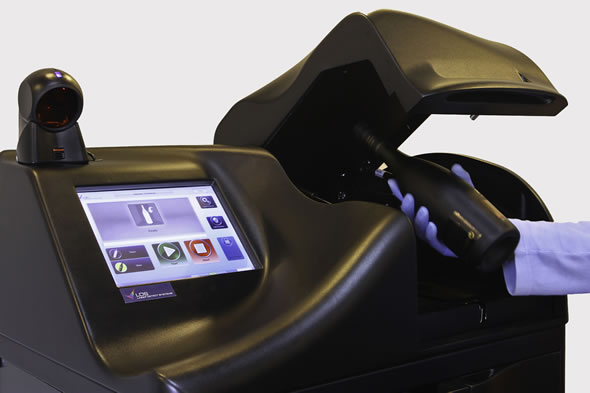
Ultra Fast Laser-Based Explosive Scanner Accelerates Airport Security Checks

Laser Detect Systems Ltd (LDS), an Israeli Electro-Optics Company has launched a breakthrough in explosive detection systems. The company announced today it completed testing of an innovative laser-based explosive scanner capable of detecting hard to detect liquid explosives in three to five seconds. Current explosive scanners are limited in their capability to detect certain types of explosives, hence the limitations imposed on carrying liquids on board passenger aircraft.

The new Israeli scanner called LDS 5500D is a desktop laser-based explosive scanner enabling accurate and reliable detection of explosive materials and hazardous compounds in liquid, gel or powder form. The scanner employs advanced laser gated Raman spectroscopy scanning methods, enabling the scanner to achieve a high level of detection, and superior processing speed.
The system successfully completed an exhaustive testing by explosive detection experts, led by the Israel’s internal security agency services. The tests included a wide range of inspections evaluating its detection capabilities and sensitivity, detecting and identifying a wide range of explosive materials, including those considered so far undetectable by other means.
“We developed our new laser scanner in cooperation with Israel’s security agencies, according to Israeli operational security concepts. Meeting these standards, LDS 5500D offers the best performance among the systems available in the market today” said Eli Venezia, President & Chairman of LDS. “In terms of high sensitivity, low false alarm rate and throughput, our system offers a great improvement over current standards, performing a typical inspection in 3-5 seconds.” Venezia added.
The LDS 5500D scans a wide range of standard, or improvised explosive materials in liquid, gel, powder or solid form, including materials contained in sealed plastic or glass bottles, as well as those materials mixed or diluted with other substances attempting to deceive existing sensors. LDS 5500D can also detect traces and residues of explosives on already inspected objects. Other applications of the LDS 5500D include reliable detection of narcotics, and forensic identification of chemicals in liquid, solid, gas and powder form.
LDS plans to unveil th enew system at the upcoming Counter Terror Expo 2012 taking place in London, April 25-26. The company will be presenting jointly with IDO Security Inc, an Israeli company whose innovative “shoes on” walk through metal detector, the Magshoe, is already a fixture for metal detection in shoes and the lower extremities at numerous airport checkpoints worldwide.
“The global market for fast, ultra sensitive and reliable explosive detection scanners is estimated at hundreds of millions of dollars and our new systems position LDS in a leading position in this field.” Said Venezia. At the Counter Terror Expo 2012 LDS will also present the LDS 6500R, Remote Scan system, a laser-based explosive detector capable of detecting standard and improvised explosive devices (IED) from a standoff distance. This laser scanner can also detect and identify hazardous materials and chemical warfare agents from tens of meters distance from the suspicious object.

 http://defense-update.com/